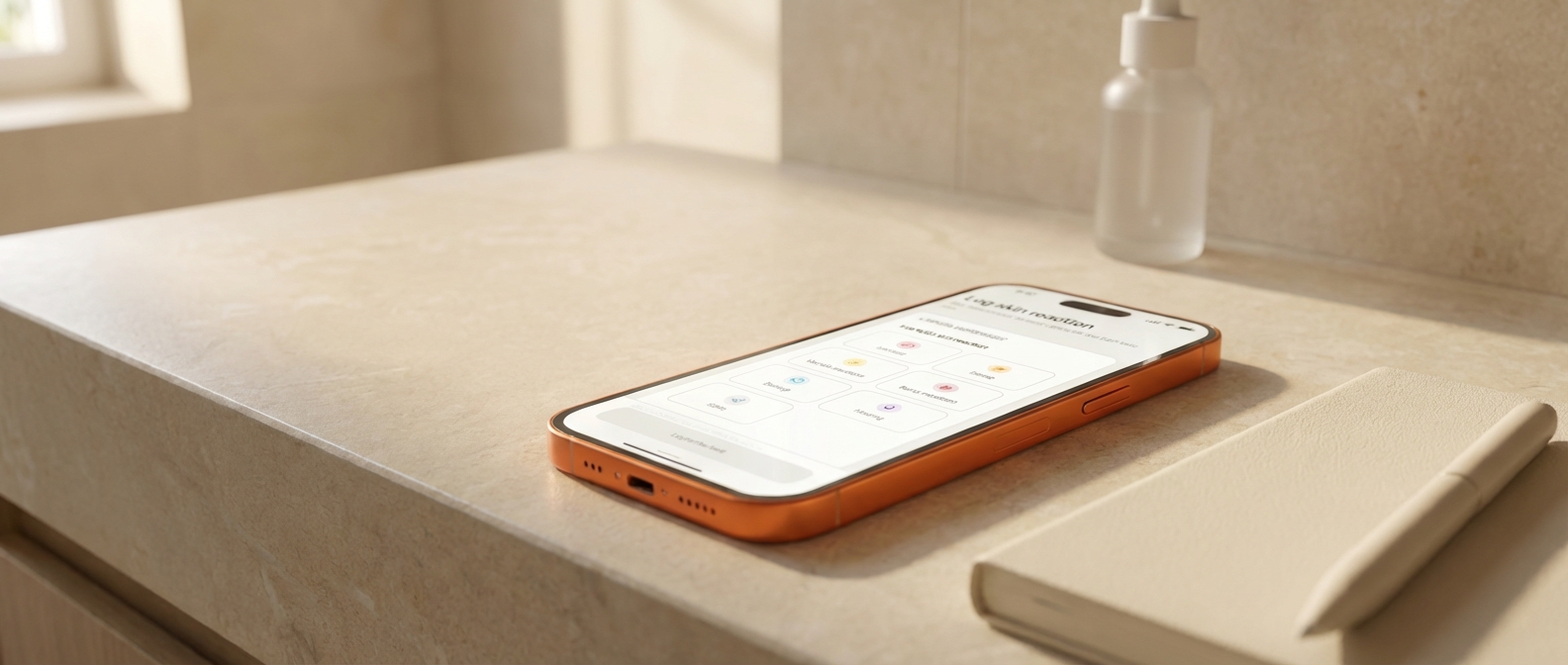
A simple reaction-tracking template to spot skincare triggers faster,what to log, how to rate severity, and example entries you can copy today.
By Skintrig Team
Skintrig Team publishes practical, privacy-first guides about ingredient tracking and skincare reaction logging.
If your skin reacts and you’re not tracking it, you’re basically running experiments without writing down the results.
This post gives you a minimal reaction-tracking template (so you can actually stick to it), plus example entries you can copy. If you want the full method for finding triggers, start here: How to Find What’s Causing Your Breakouts (Without Guessing).
What this template is (and isn’t)
This is a pattern-finding workflow:
- you log reactions consistently,
- you connect reactions to products used in the prior days,
- you compare ingredient overlap across repeat reactions.
It’s not medical advice and it won’t diagnose anything. If reactions are severe, painful, widespread, scarring, or not improving,talk to a professional.
The minimal tracker (6 fields that actually matter)
You only need six fields:
- Date + time (approx.)
- Area (jawline / cheeks / forehead / around mouth / neck)
- Symptom type (acne / itch / burning / redness / dryness)
- Severity (1–5)
- Products used in the last 72 hours (names, not categories)
- Notes (optional): sweating, shaving, cycle, stress spike, new detergent, etc.
Severity scale (simple and consistent)
Use a scale you can apply without thinking:
-
1 = noticeable, but doesn’t bother you
-
2 = mild, you’re aware of it
-
3 = moderate, clearly visible / uncomfortable
-
4 = strong, painful / very visible
-
5 = severe, intense discomfort or widespread
The number is less important than being consistent.
Copy-paste template (Notes / Notion / spreadsheet)
Prefer a spreadsheet?
If you like working in Excel or Google Sheets, you can start with a ready-made file and adapt it to your routine.
Use this exact format:
Reaction Log Entry
- Date/time:
- Area:
- Symptom:
- Severity (1–5):
- Products used last 72h:
- Notes:
Example: acne breakout (delayed)
Reaction Log Entry
- Date/time: Feb 12, evening
- Area: jawline + chin
- Symptom: acne (inflamed spots + congestion)
- Severity (1–5): 3
- Products used last 72h: Cleanser A, Moisturizer B, Sunscreen C, Serum D
- Notes: shaved yesterday, wore mask for 3h
Example: irritation (fast)
Reaction Log Entry
- Date/time: Feb 12, 20 minutes after routine
- Area: cheeks + around nose
- Symptom: burning + redness
- Severity (1–5): 4
- Products used last 72h: Cleanser A, Moisturizer B, “New Toner X”
- Notes: stung immediately, washed off after 10 minutes
Example: dryness / tightness (slow)
Reaction Log Entry
- Date/time: Feb 12, next morning
- Area: around mouth
- Symptom: dryness + flaking
- Severity (1–5): 2
- Products used last 72h: Cleanser A, Retinoid E, Moisturizer B
- Notes: cold weather, heater on overnight
How to review your log (weekly, 5 minutes)
Once per week:
- Look for repeat reactions (same area + symptom).
- For each reaction, list products used in the 72h window.
- Identify overlaps: products that keep showing up.
- (Next step) capture INCI for those products and compare overlap.
If you don’t have the method yet, read the pillar post:
How to Find What’s Causing Your Breakouts (Without Guessing)
Where an app helps (without changing the method)
You can do this in Notes. But most people stop because it’s annoying.
An app can remove the friction:
- logging severity + area in a few taps (instead of typing),
- keeping a clean history (“show me all jawline reactions”),
- connecting reactions to products automatically.
That’s it. No magic. Just fewer reasons to quit.
Want to go deeper?
Pre-Purchase Ingredient Check: Stop Wasting Money , a 60-second check before buying so you avoid your known triggers when shopping.
If you want to track this without spreadsheets, jump to the site and join the beta (or the waitlist) from the homepage.
References
Want these insights in one place?
Join the waitlist to get early access when beta opens (planned for mid to end of March 2026).
Join waitlistRelated posts
-
 Common irritants in skincare: how to identify and avoid your triggers
 A practical guide to the skincare ingredients that most often irritate sensitive skin, how to read labels more carefully, and how to spot patterns in your own routine without guessing.
-
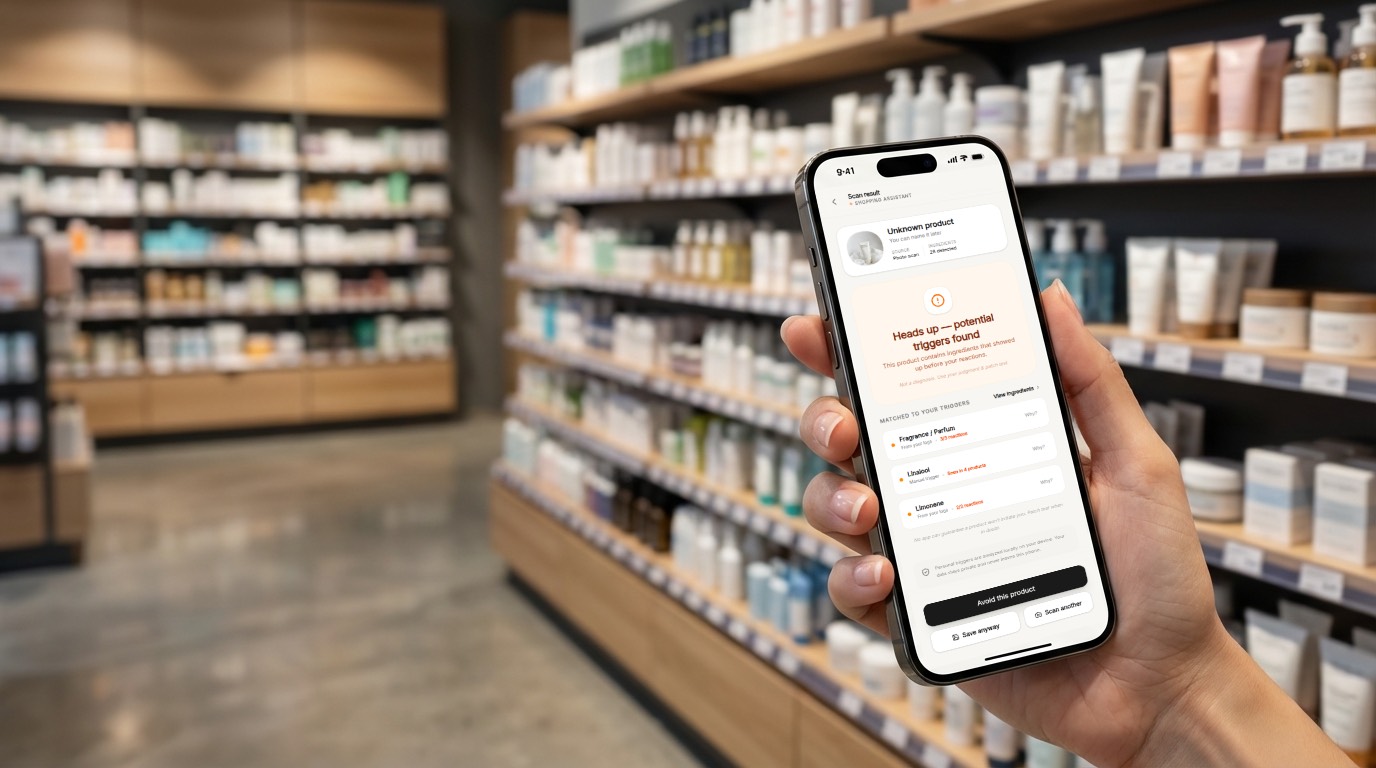 Pre-Purchase Ingredient Check: Stop Wasting Money on Irritating Skincare
 A 60-second ingredient check you can do before buying skincare, so you avoid known triggers, reduce flare-ups, and stop gambling on products.
-
 How to Find What's Causing Your Breakouts (Without Guessing): A Simple Tracking Method
 A practical method to identify your personal skincare triggers using timing + ingredient overlap,plus how INCI scanning and tracking makes it effortless.