"Fragrance-free" has a specific regulatory meaning that doesn't cover every scent-related ingredient. Here's what the label actually tells you, and what it doesn't.
By Skintrig Team
Skintrig Team publishes practical, privacy-first guides about ingredient tracking and skincare reaction logging.
You switched to fragrance-free products. You’re still reacting. This is more common than it sounds, and it has a straightforward explanation, one that’s worth understanding before you change your routine again.
“Fragrance-free” is a specific regulatory claim with a narrow definition. It tells you one thing about what’s in the product. It doesn’t tell you everything.
What does “fragrance-free” actually mean on a label?
In most regulated markets, “fragrance-free” means the product was formulated without adding a perfume mixture, the kind that gets listed as “Parfum” or “Fragrance” on an INCI ingredient list. That Parfum entry is a single term covering a mixture of aromatic compounds, and brands are not required to disclose individual components within it. Fragrance-free products omit that declared mixture.
What the claim doesn’t address is every other ingredient that might contain scent-related chemistry. The claim is about a specific ingredient category, not about the chemistry of the full formulation. A product can truthfully be labelled “fragrance-free” while containing botanical extracts, essential oils, or other ingredients that include naturally occurring aromatic compounds, because those are not classified as parfum under the regulatory framework.
Understanding what the claim actually covers is the first step to reading fragrance-free labels more accurately.
What ingredients can still show up in fragrance-free products?
Three categories are worth knowing about, not as a list of things to avoid, but as a list of things to pay attention to in your own data.
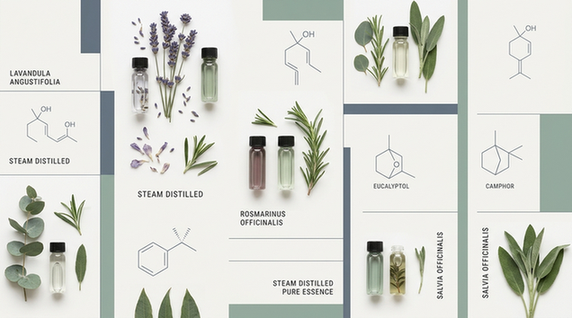
Essential oils are plant-derived extracts that appear in many skincare formulations for their functional or sensory properties. Rosehip oil, lavender oil, tea tree oil, these are not classified as “Parfum” on an INCI list, because they’re listed by their botanical or INCI name instead. However, essential oils contain naturally occurring compounds, linalool, limonene, geraniol, citral, that are themselves tracked as potential sensitizers in cosmetic regulation. Whether you personally react to them is something no label can answer in advance.
Botanical extracts are similar in principle. A plant extract included for its active compounds may also contain trace aromatic compounds from the same source. The extract’s INCI name reflects its botanical origin, not its fragrance-related chemistry. If you’re using multiple products that share a botanical extract and noticing a pattern, that extract is worth tracking.
Masking agents are the least discussed category. Some preservatives, emollients, or functional ingredients have an inherent smell that formulators neutralize by adding a masking agent, a compound that suppresses the unpleasant note without adding an obvious fragrance. These agents may not be disclosed under “Parfum” because they’re not being added for scent; they’re being added to remove it. The result is a fragrance-free product that still contains a compound with aromatic chemistry.
What’s the difference between “fragrance-free” and “unscented”?
These two claims are often used interchangeably in marketing, but they describe different things. Fragrance-free means no declared parfum was added. Unscented typically means the product has no noticeable smell, which can be achieved either by using no fragrance at all, or by adding masking agents to cancel out the smell of other ingredients.
An unscented product, in other words, may actually contain more fragrance-adjacent chemistry than a fragrance-free one, because masking agents were specifically added to produce a neutral sensory result. Neither claim is a guarantee that every aromatic compound is absent. The INCI list is still the most reliable way to understand what’s in a product, it’s just worth knowing how to read it in this context.
If you want to understand the difference between what these claims mean versus what the INCI list discloses, reading the full ingredient list is more informative than the front-of-pack claim.
How does tracking your own patterns help here?
If you’re reacting to fragrance-free products, the most useful next step is identifying what those products have in common. Switching to a new “fragrance-free” alternative addresses the symptom, the declared parfum, without addressing whatever ingredient may actually be correlating with your reaction.
That’s where ingredient-level logging makes a practical difference. If you’re logging products in Skintrigue and a reaction follows several fragrance-free products, Skintrigue can surface the ingredients those products share in your own data. The pattern, if one exists, shows up across your personal log, not in a generalized claim about which ingredients are problematic. An essential oil that appears in three fragrance-free products you’ve reacted to is more worth your attention than a general warning about essential oils.
The goal isn’t to build a new avoid list. It’s to narrow the field from “something in this formulation” to a specific ingredient worth watching in your future product choices.
The practical takeaway
“Fragrance-free” is a useful label claim, it tells you one specific thing was omitted. But it’s one data point, not a complete picture of the formulation’s chemistry. If reactions continue in fragrance-free products, looking for patterns across those products’ ingredient lists is more productive than switching to the next fragrance-free option and hoping for different results. The label is a starting point. Your logged data is where the specificity lives.
FAQ
Can I react to a product that’s labelled fragrance-free?
Yes. “Fragrance-free” means no declared parfum mixture was added. Essential oils, botanical extracts, and masking agents are not classified as parfum under INCI rules, so they can appear in fragrance-free formulations. Whether any of these ingredients correlates with reactions in your own data is something personal tracking can help clarify over time.
Are essential oils considered fragrance on an INCI list?
No, essential oils are listed by their botanical or INCI name, not under “Parfum” or “Fragrance.” Lavender oil appears as “Lavandula Angustifolia Oil,” rosehip as “Rosa Canina Fruit Oil,” and so on. This is why essential oils can be present in fragrance-free products: they’re a separate ingredient category under the INCI system, even though they contain naturally occurring aromatic compounds.
What is the difference between fragrance-free and unscented?
Fragrance-free means no parfum mixture was intentionally added to the formulation. Unscented means the finished product has no noticeable smell, which can be achieved either by omitting fragrance or by adding masking agents to neutralize the smell of other ingredients. An unscented product may therefore contain masking agents that a fragrance-free product would not necessarily include.
Why does a fragrance-free product still have a smell?
Several explanations are possible. Certain ingredients, some oils, preservatives, or actives, have a natural smell that’s inherent to the ingredient, not added for sensory effect. Some formulations use masking agents, which suppress unpleasant notes but may have their own mild scent. And some products that claim “fragrance-free” on the front of the packaging may still list naturally occurring fragrance components as individual INCI ingredients, because they’re disclosed as part of a botanical extract rather than under “Parfum.” Reading the full ingredient list is more reliable than relying on the front-of-pack claim alone.
Want these insights in one place?
Join the waitlist to get early access when beta opens (planned for mid to end of March 2026).
Join waitlistRelated posts
-
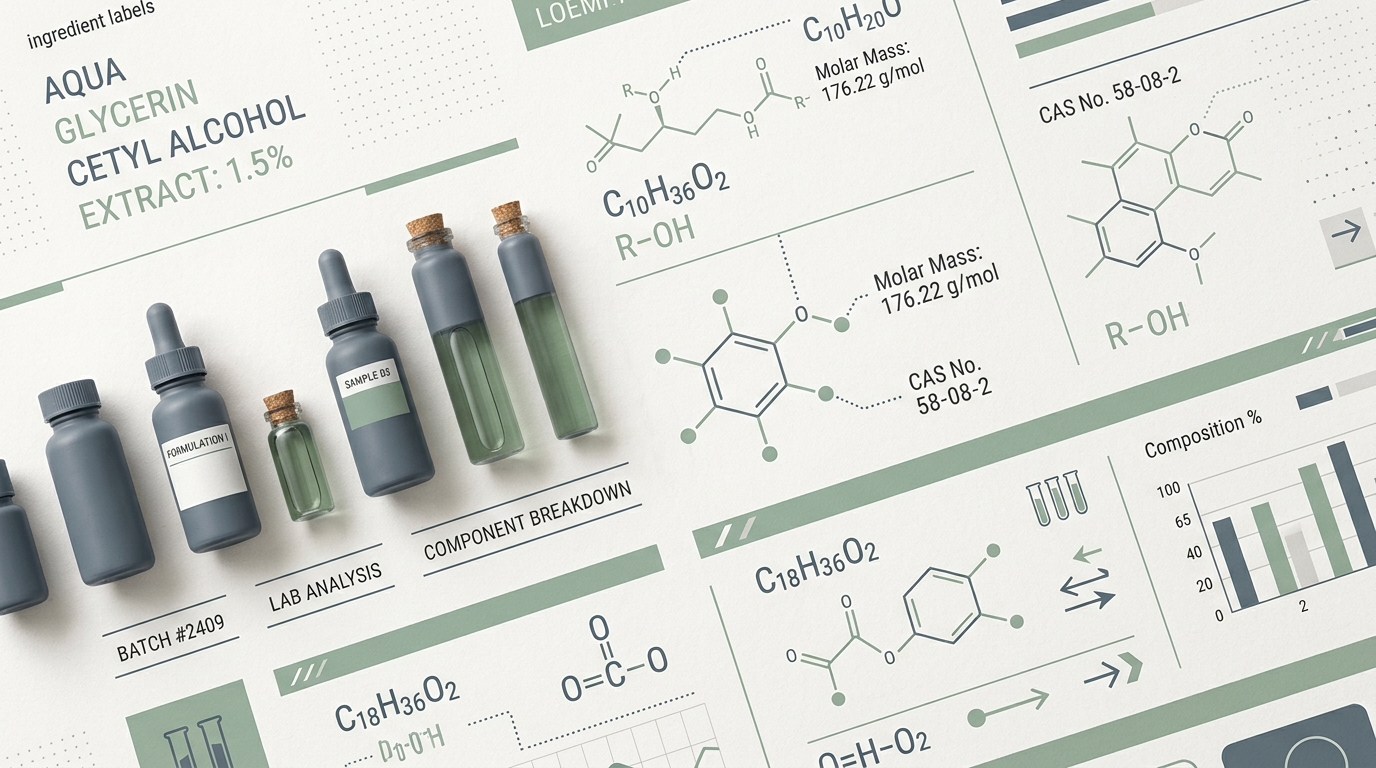 What Is an INCI List and How Do You Read It?
 INCI lists are the standardized ingredient disclosures on every cosmetic product. Here's what the naming system means, how ordering works, and what the list can't tell you.
-
 Common irritants in skincare: how to identify and avoid your triggers
 A practical guide to the skincare ingredients that most often irritate sensitive skin, how to read labels more carefully, and how to spot patterns in your own routine without guessing.
-
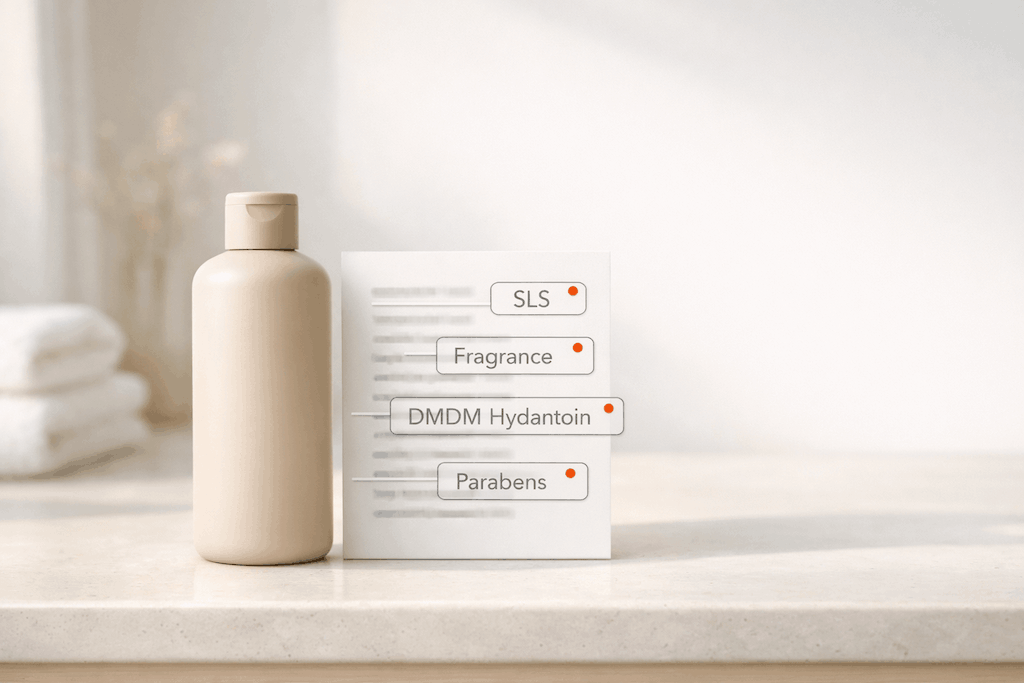 What Ingredients to Avoid in Shampoo? A Complete Guide to Safer Hair Care
 A science-informed breakdown of shampoo ingredients to avoid and how to read labels for healthier scalp care.