
A practical guide to the skincare ingredients that most often irritate sensitive skin, how to read labels more carefully, and how to spot patterns in your own routine without guessing.
By Skintrig Team
Skintrig Team publishes practical, privacy-first guides about ingredient tracking and skincare reaction logging.
Sensitive skin can make skincare feel random. One product seems fine for a week, then your skin starts burning. Another promises to be “gentle,” but leaves you red, tight, or itchy by the next morning.
The hard part is that irritation is rarely explained clearly on the label. A product may say calming, clean, for sensitive skin, or fragrance-free and still contain ingredients your skin does not tolerate well.
This guide is built to be practical, not dramatic. We’ll go through the most common skincare irritants, what they tend to do, how to read ingredient lists more carefully, and how to figure out your triggers without relying on guesswork.
Why irritation is so hard to figure out
Most people do not react to a single product in a neat, obvious way. Instead, irritation usually happens in a messier pattern:
- you start several products close together,
- your skin barrier is already stressed,
- a product seems fine at first but becomes a problem with repeated use,
- or a reaction shows up late enough that you blame the wrong product.
That is why sensitive skin often turns into a cycle of buying, trying, reacting, and guessing.
What helps most is not a universal blacklist. It is a better method:
- keep your routine simple enough to observe,
- read ingredient lists instead of front-label claims,
- introduce changes slowly,
- and track reactions consistently enough to spot overlap.
The most common skincare irritants to watch for
These are some of the categories that most often show up in products linked to stinging, redness, dryness, itching, or barrier disruption.
1. Fragrance
Fragrance is one of the most common reasons sensitive skin reacts badly to a product.
On ingredient lists it may appear as:
FragranceParfum- essential oils or fragrant plant extracts
- fragrance allergens such as
Limonene,Linalool,Citral,Geraniol, orEugenol
The difficulty is that fragrance is not one single ingredient in the way most people imagine it. It is often a blend. Even when a product smells “natural,” that does not make it safer for reactive skin.
Common signs fragrance may be a problem for you:
- immediate stinging after application,
- redness that appears repeatedly with multiple products,
- irritation around the eyes or cheeks,
- or a pattern where “nice-smelling” products keep ending badly.
2. Drying alcohols
Some alcohols are helpful in skincare. Others are much more likely to dry and irritate already stressed skin.
Drying alcohols often include:
Alcohol Denat.SD AlcoholIsopropyl AlcoholEthanol(depending on formula context)
These ingredients are often used to make a product feel lighter, absorb faster, or dry down quickly. For oily skin that may sound appealing, but for sensitive or barrier-damaged skin they can contribute to tightness, flaking, and burning.
Do not confuse them with fatty alcohols, which are usually not the problem. Ingredients like Cetearyl Alcohol, Cetyl Alcohol, and Stearyl Alcohol are commonly used as emollients and texture helpers.
3. Harsh surfactants and aggressive cleansers
If your cleanser leaves your face feeling squeaky, overly tight, or dry, the formula may be too harsh for you.
Surfactants to watch more carefully include:
Sodium Lauryl Sulfate- strong foaming systems used in some cleansers and body washes
Not everyone reacts, but if your skin is already reactive, over-cleansing can make everything else sting more too. Sometimes the issue is not your serum or moisturizer at all. It is the cleanser quietly weakening your barrier twice a day.
4. Exfoliating acids used too often or too strongly
Acids are not automatically bad. But they are a common source of irritation when the concentration is too high, the routine is too aggressive, or your barrier is already struggling.
This includes:
- glycolic acid,
- salicylic acid,
- lactic acid,
- mandelic acid,
- exfoliating pads,
- multi-acid routines,
- and “daily resurfacing” products stacked together.
Warning signs include:
- burning during application,
- increased redness,
- shiny but fragile-looking skin,
- flaking,
- or suddenly reacting to products you previously tolerated.
Sometimes the problem is not one acid product. It is the total exfoliation load across your routine.
5. Retinoids introduced too fast
Retinoids can be useful, but they are also a very common reason people end up with an irritated barrier.
Common forms include:
RetinolRetinalRetinyl Palmitate- prescription-strength retinoids
If your skin starts peeling, burning, or becoming unusually reactive after starting a retinoid, the issue may be dose, frequency, or the rest of the routine around it.
6. Essential oils and botanical extracts
A product can look gentle because it is marketed as plant-based, natural, or botanical-rich. That does not guarantee it will be well tolerated.
Essential oils and fragrant botanicals can still irritate sensitive skin, especially when they are present for scent rather than function.
Examples that can be worth a second look if you are reactive:
- peppermint oil,
- citrus oils,
- lavender oil,
- tea tree oil,
- strongly fragranced flower extracts.
7. Certain preservatives
Preservatives are necessary. A product without preservation is not automatically safer.
Still, some preservatives are more likely than others to show up in reactions for certain people. If you notice repeated problems across different products, it can be worth checking whether the same preservative system keeps appearing.
Quick comparison: what to watch for and what to try instead
| Ingredient category | Why it can be a problem | What to look for instead |
|---|---|---|
| Fragrance / parfum | Can trigger stinging, redness, or delayed irritation | Fragrance-free formulas with minimal scent masking |
| Drying alcohols | Can dehydrate and weaken the barrier | Hydrating, alcohol-free bases or formulas built around humectants and emollients |
| Harsh surfactants | Can leave skin tight, stripped, and more reactive | Low-foam or gentler cleansers |
| Strong exfoliation | Can overwork the barrier and increase sensitivity | Lower frequency, lower strength, simpler exfoliation routines |
| Retinoids used too aggressively | Can cause peeling, burning, and secondary sensitivity | Slower introduction and fewer competing actives |
| Fragrant essential oils | Can irritate despite “natural” positioning | Plain, low-fragrance formulas with shorter ingredient lists |
Why ingredient labels matter more than marketing claims

A product can look calming, minimalist, or “made for sensitive skin” and still contain ingredients that your skin does not love.
That is why the ingredient list matters more than the front label. Marketing claims tell you how a product wants to be perceived. INCI tells you what is actually inside.
How to read an ingredient list more usefully
Reading INCI does not mean you need to memorize thousands of ingredients. You only need to get better at spotting the categories that matter most for your skin.
A few useful habits:
Look past the front label
“For sensitive skin” is not proof. Neither is “dermatologist tested,” “clean beauty,” or “natural.”
The ingredient list matters more than the marketing line.
Watch for repeats across products
One product can mislead you. Three products with the same suspicious ingredient are much more interesting.
If you reacted to multiple moisturizers and they all contain fragrance, that is more useful than any single review or trend.
Notice formula context
An ingredient is not always the villain just because it is present. The full formula matters.
That is why tracking helps so much. It keeps you from overreacting to a single ingredient appearance and helps you focus on repeated overlap.
A better method than guessing
If your skin reacts often, the most useful thing you can do is stop changing everything at once.
Try this instead:
Start with a simpler baseline
Use a basic cleanser, moisturizer, and sunscreen you already tolerate reasonably well, if possible. Keep the routine boring for a bit.
Introduce one change at a time
When you add a new product, do not add three more that same week. Otherwise you lose the ability to tell what actually happened.
Log both the product and the reaction
This is where most people stop too early. They remember the product name, but not the full ingredient list. Or they remember they had redness, but not when it happened or where.
Even a simple log helps:
- product name,
- full INCI,
- date started,
- what happened,
- when it happened,
- and whether you stopped the product.
Look for overlap, not certainty too early
The real signal is not “I used this once and it burned.”
The real signal is more like:
- I reacted to three different products,
- and two or three of them share the same ingredient category,
- while products without that ingredient seem easier for me to tolerate.
That is how useful trigger suspicion starts.
Signs you may be dealing with irritation rather than “bad skin”
Sometimes people keep buying stronger actives when the real issue is that their skin is simply overwhelmed.
Possible clues include:
- products burn on application,
- your skin feels tight even when it looks shiny,
- redness appears after cleansing,
- you suddenly tolerate fewer products than before,
- the same routine gets worse over time instead of better.
That is often a sign to reduce intensity, not increase it.
Where Skintrigue fits in
Skintrigue is built for exactly this kind of pattern-finding.
Instead of trying to score products or tell you what to buy, it helps you do something more honest and more useful:
- log the products you actually use,
- log the reactions you actually have,
- and look for repeated ingredient overlap in your own history.
That is the key idea behind the product: insights first, shopping second. First you build enough data to notice likely triggers. Then you can use that information while checking a new product label.
If a product contains an ingredient that keeps showing up before your reactions, that is worth your attention. If there is no known match, that is still only a neutral result, not a guarantee.
Bottom line
The most common skincare irritants are not always exotic. Often they are familiar ingredients that appear again and again in everyday products: fragrance, drying alcohols, harsh cleansing agents, overused exfoliants, aggressive retinoid routines, and certain fragrant botanicals or preservatives.
The goal is not to build fear around ingredients. It is to build a method.
When you keep your routine simpler, introduce products more carefully, and track ingredient overlap instead of relying on memory, your skin becomes much easier to understand.
And that is usually the point where skincare starts feeling less like guesswork.
References
Want these insights in one place?
Join the waitlist to get early access when beta opens (planned for mid to end of March 2026).
Join waitlistRelated posts
-
 How to Find What's Causing Your Breakouts (Without Guessing): A Simple Tracking Method
 A practical method to identify your personal skincare triggers using timing + ingredient overlap,plus how INCI scanning and tracking makes it effortless.
-
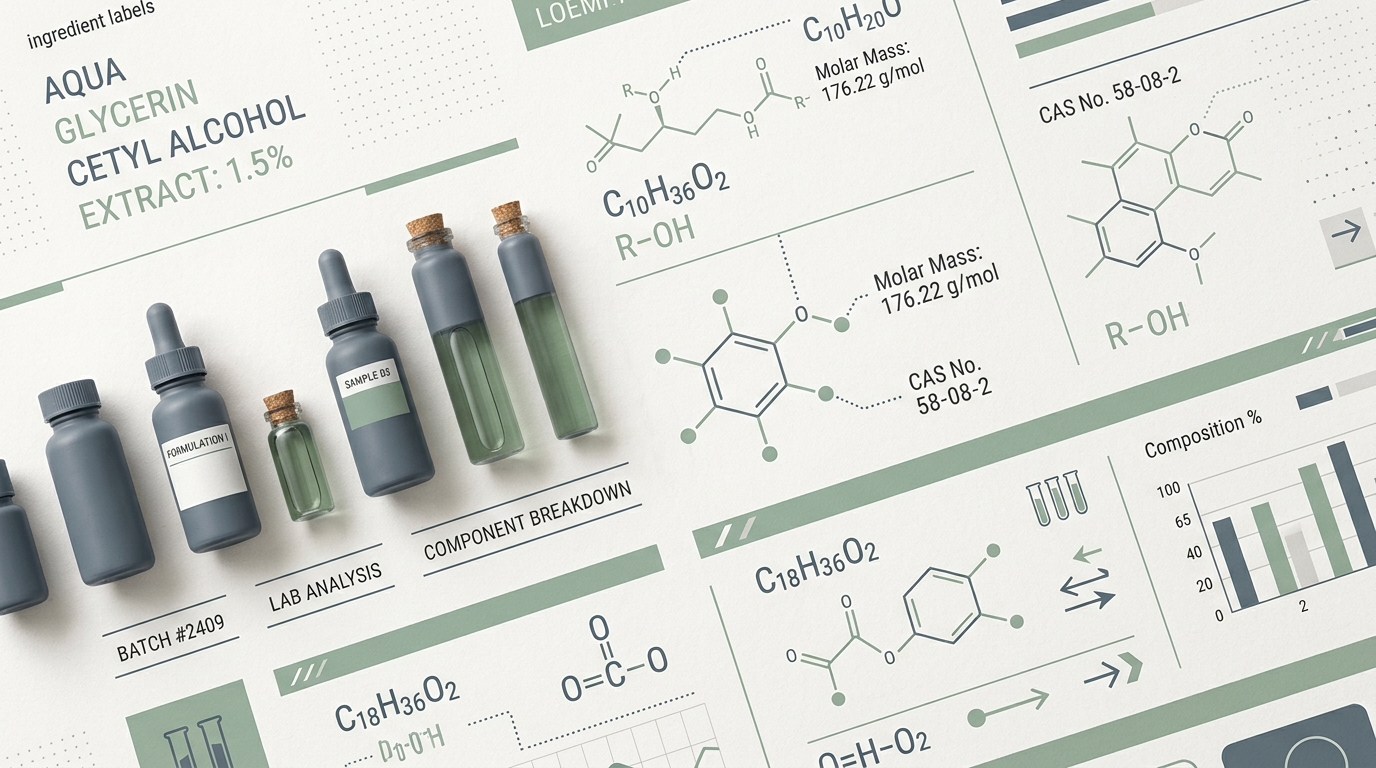 What Is an INCI List and How Do You Read It?
 INCI lists are the standardized ingredient disclosures on every cosmetic product. Here's what the naming system means, how ordering works, and what the list can't tell you.
-
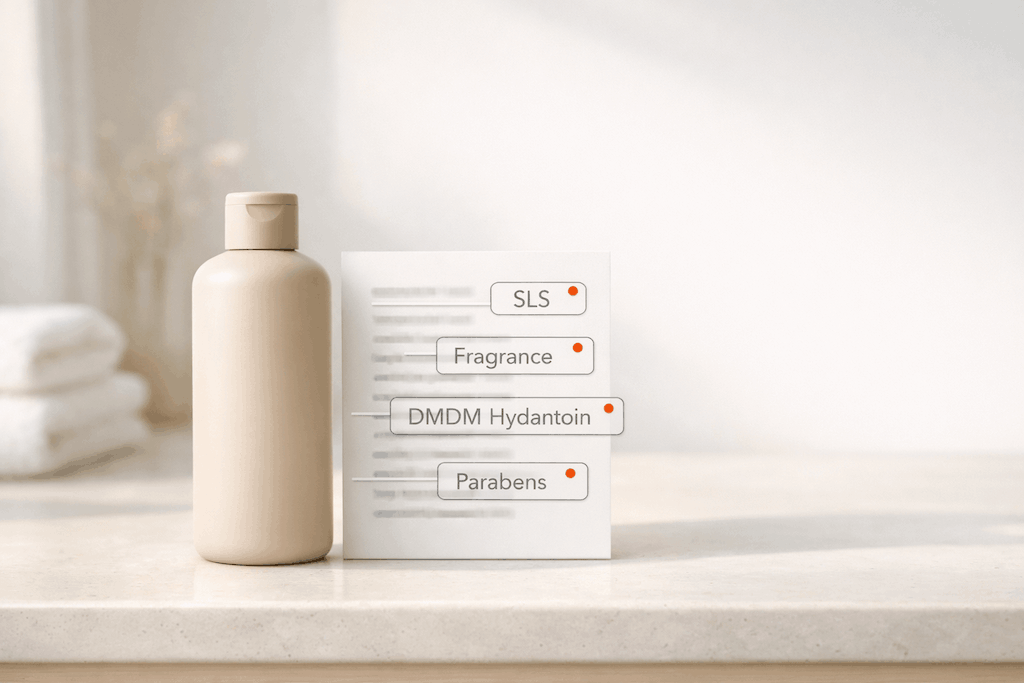 What Ingredients to Avoid in Shampoo? A Complete Guide to Safer Hair Care
 A science-informed breakdown of shampoo ingredients to avoid and how to read labels for healthier scalp care.